Replace Operational Roles With Deterministic Execution
We install and operate doctrine-bound AI systems that take ownership of repeatable operational work, making execution consistent, auditable, and independent of who is on shift.
If a role is hard to hire, hard to keep, or produces inconsistent results, it’s a candidate for system ownership.
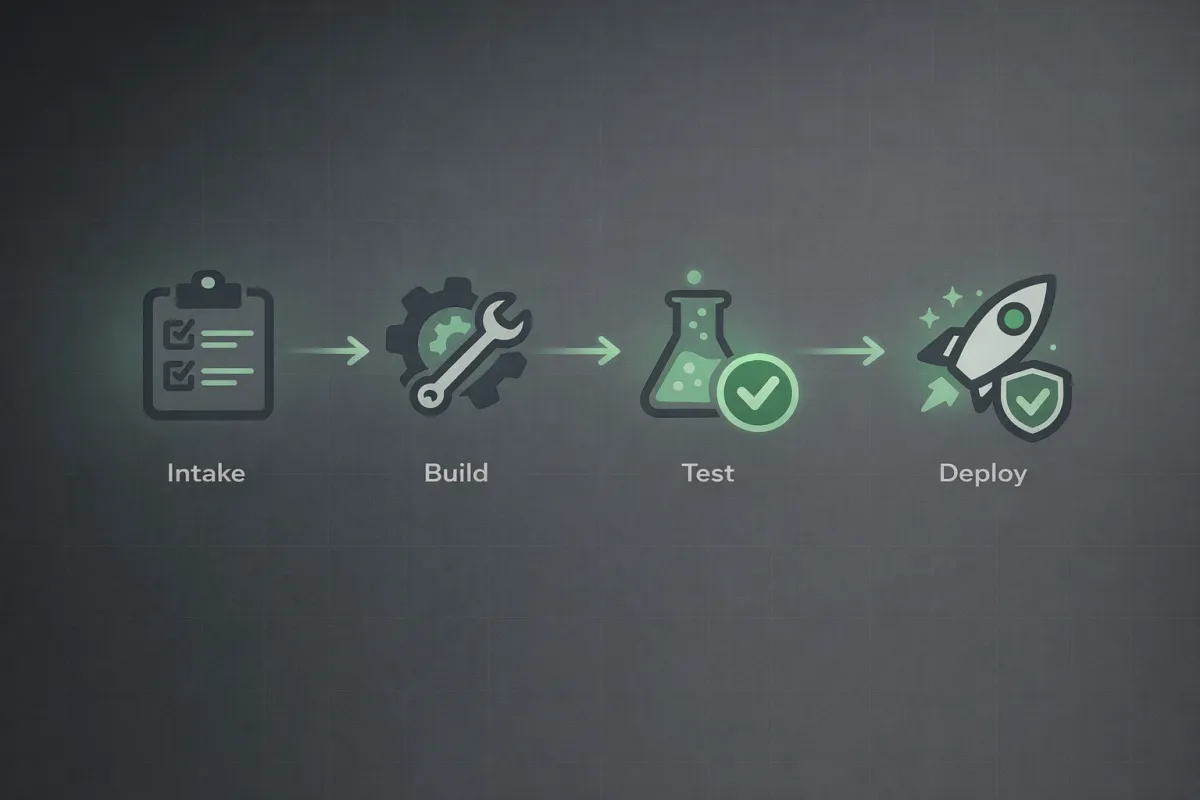
How Systems Are Installed and Operated
We do not sell a tool. We deploy and operate doctrine-bound AI employee systems around your workflow, rules, and brand voice, then keep them reliable in production.
Deployment (one-time)
Doctrine, boundaries, workflows, testing, launch
Operation (ongoing)
Monitoring, escalation, supervised change, reliability
Are These Operational Bottlenecks Slowing You Down?
Most teams are not short on tools.
They are short on operational consistency.
When execution depends on who handled the work, outcomes drift, managers babysit, and data can’t be trusted.
Problem 1: Inbound Volume + Inconsistent Handling
When the phone rings, the process should not depend on who picked up, or if anyone picked up. Inconsistent handling creates inconsistent outcomes.
Agentic Fix:
A doctrine-bound inbound system that handles intake, scheduling, escalation, and logging the same way every time.
Problem 2: CRM Hygiene Decay
Most CRMs quietly rot. Missing fields, wrong stages, duplicate contacts, no notes, no disposition, and no clean handoff trail.
Agentic Fix:
Deterministic CRM operations paired with doctrine-bound intake and logging, so data stays clean without manual cleanup.
Problem 3: Cross-System Work Leaking Back to Humans
The real work is not the conversation. It is what happens after, routing, coordination, status, approvals, follow-up, and moving data between systems.
Agentic Fix:
Cross-system workflows with state, retries, escalation, and traceable execution, so work completes without babysitting.

Problem 4: Reporting That Drifts or Shows Up Late
Reporting should be consistent and on schedule, not a weekly scramble that depends on who had time.
Agentic Fix:
A doctrine-bound reporting system that pulls approved data, writes consistent narratives, delivers on schedule, and archives outputs.
Problem 5: No Guardrails, No Accountability
Most “AI” setups fail for one reason, they cannot prove what they did, why they did it, or when they escalated.
Agentic Fix:
Explicit doctrine, authority boundaries, escalation rules, and audit logs, predictable execution over improvisation.
These are not edge cases. They are symptoms of execution that depends on people instead of systems.

Control, Guardrails, and Auditability
Automation only scales when it is predictable. Every AI employee we deploy runs under doctrine, a defined playbook that controls what it can say, what it can do, and what it must escalate.
• Authority boundaries and “no-go” zones for sensitive actions
• Explicit escalation rules and human handoff paths
• Approved sources of truth, no guessing off random context
• Scenario testing before launch
• Structured outputs, required fields, consistent formatting
• Execution logs, what ran, what changed, what was produced
Roles Commonly Replaced or Stabilized
Analyst and Reporting Employee (Daily or Weekly)
A managed reporting role that pulls approved data, computes what changed, detects exceptions, writes the narrative, and delivers on schedule with an audit trail.
Operations Coordinator (Workflow Ownership Across Tools)
A managed operations role that coordinates multi-step work across your tools, enforces SLAs, handles exceptions, and escalates approvals when required.
AI Inbound Employee (Intake + Scheduling + CRM Hygiene)
A managed inbound role that answers calls, captures structured intake, schedules next steps, routes by policy, and keeps CRM records clean.

Most businesses already have tools in place
We Start With What You Already Use
Most teams do not need a new stack. They need their stack to execute the workflow the same way every time.
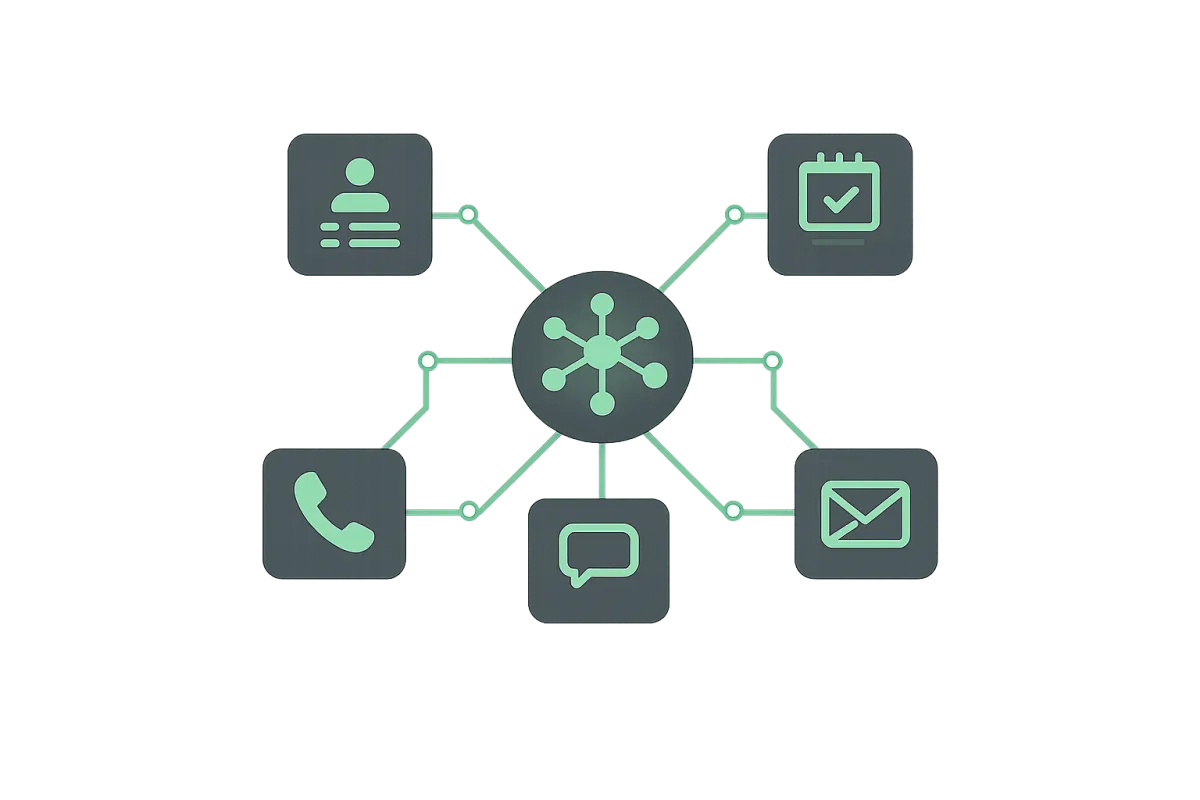
Integration layers include:
CRMs (GoHighLevel and others via API/webhooks)
Calendars (Google, Outlook)
Email and SMS
Forms and web leads
Spreadsheets and file-based inputs
Databases and APIs
For multi-step or mission-critical workflows, we run the system through our managed execution layer so scheduling, state, retries, logging, and escalation work reliably, even when third-party automation tools hit limits.
You do not maintain this layer, we operate it for you.
Hi, I’m Eric Jellerson
I build operational systems where reliability matters.
Workflows that run the same way every time, with clear boundaries, logs, and escalation instead of drift and improvisation.
Most teams do not need more tools. They need role-level execution that stays consistent as volume increases. That is what Agentic Desk Solutions builds, AI employees where conversation is required, and workflows where the work should execute automatically.

Why Agentic Desk Solutions
Most businesses do not need more software. They need operational roles executed predictably, with clean data, clear rules, and zero babysitting.
Systems, Not Scripts
We build around your real workflow, approvals, and escalation paths, not templates.
Doctrine and Guardrails
Sensitive cases escalate. Decisions stay inside boundaries. Outputs are auditable.
Execution Engine Included
Agents handle conversation. Workflows handle the operational work behind it.
Managed Operations
We design, test, launch, stabilize, monitor, and improve the system over time.
Works With Messy Reality
We start with what you have, connect the essentials first, then expand.
We understand that every business is different. Our automation tools are fully customizable to meet your specific business requirements.
Our software integrates seamlessly with your existing systems, and our dedicated customer support team ensures smooth onboarding
and ongoing assistance.
AI Employees Are the Role, Workflows Are the Execution Layer
Most offerings stop at “answer the phone” or “send the follow-up.” That is not role replacement, that is a demo.
We run a two-layer operating model:
CRM operations stay clean and deterministic (configuration, routing, hygiene, simple rules) Agentic employees handle the work that requires judgment across systems, doctrine enforcement, escalation, and auditability
The AI employee is the interface. The workflows are the engine behind it, stateful, monitored, retriable, and logged.
Common Results

Fewer missed calls, faster qualification, cleaner CRM records
Daily reporting delivered on time, every time, with an audit trail
Less manual routing and coordination, clearer ownership and SLAs
More work completed without additional headcount
Consistent intake, fewer errors, fewer back-and-forth cycles
Here’s What You Get…
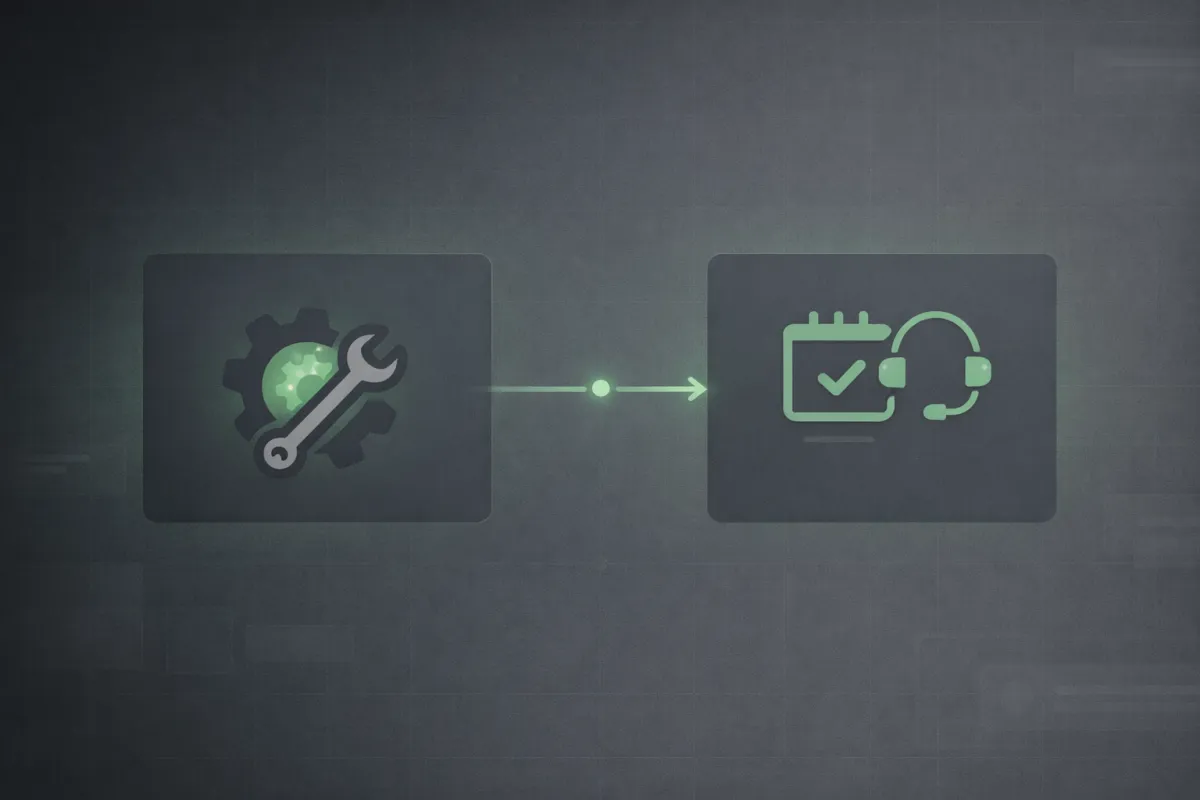

A managed AI employee system built around a defined role, your rules, and your brand voice, deployed and stabilized so it performs reliably in real operations.
Included:
✅ Role definition, doctrine, authority boundaries, escalation rules
✅ Workflow mapping with definitions of “done,” edge cases, approvals
✅ On-brand language constraints (when customer-facing)
✅ Integrations across CRM, calendar, email, docs, sheets, databases/APIs as needed
✅ Scenario testing, failure-mode hardening, and go-live stabilization
✅ Monitoring, incident response, and controlled improvements over time
✅ Logging and auditability, what ran, what changed, what it produced
Progressive Role Replacement
Most clients progress through a simple sequence:
1. Task elimination, remove the manual steps first
2. Workflow ownership, the system runs multi-step execution end-to-end
3. Role replacement, an AI employee owns the operational responsibility with doctrine, escalation, and audit logs
Pricing That Matches Responsibility, Not “AI Usage”
Pricing is based on role scope, decision boundaries, and operational load, not tokens, minutes, or vanity usage meters.
Simple structure:
Every engagement has two components:
One-time deployment, design, build, integration, testing, launch Ongoing managed operations, monitoring, maintenance, and controlled evolution
Starting points:
Deployments start at $2,997 for a single role Managed operations start at $750/month Voice usage, when included, is billed separately as a consumable, not the value driver.
Submit a callback request and we will scope the role, recommend the right configuration, and quote based on your actual workflow.
Frequently asked
questions
Contact us via support if you have any more questions.
What happens after I submit the form?
We review your inquiry and our intake agent will reach out during business hours (Mon–Fri) to confirm what you need and schedule a consult if it’s a fit. A human reviews every intake.
Is this a software subscription or a managed service?
Managed service. We design, deploy, and operate doctrine-bound AI employees and workflows around your process, then manage reliability and improvements over time.
What’s the difference between an AI employee and an automation?
An automation executes a predefined action chain, “if X, then do Y.”
An AI employee is assigned a role with doctrine, it can handle conversations, interpret intent, follow your policies, and escalate edge cases, while still using automations underneath to execute tasks.
In practice: automations are the engine, AI employees are the role-level interface and decision layer.
Can I buy automations without a voice agent?
Absolutely. If your bottleneck is internal ops, reporting, routing, CRM hygiene, or back-office workflows, we can deploy automation-only systems.
Voice is for customer-facing roles. Automation-only is great when the work is operational execution, not conversation.
Will it mess up or say the wrong thing?
Not if it’s deployed correctly. Every AI employee runs under doctrine: defined authority boundaries, approved sources, structured outputs, and escalation rules.
If something falls outside bounds, is sensitive, or requires human judgment, it escalates. We also log what happened so it’s reviewable, not mysterious.
How is this different from simple Zapier automations?
Zapier-style tools are fine for single-step triggers. They tend to break when workflows need state, sequencing, retries, exceptions, escalation, or auditability.
We build role-grade operational systems: monitored, stateful, retriable, logged, and designed to run reliably when the real world gets messy.
Our systems are messy - will this integrate?
Usually, yes. Most businesses are messy. We start with what you already use, connect the essentials first, then expand.
If something is too brittle or too manual to integrate safely, we’ll say so and propose the simplest structural fix.
How does pricing work?
Two parts:
One-time deployment (scope, build, integrations, testing, go-live)
Ongoing managed operations (monitoring, maintenance, improvements)
If voice is included, minutes are billed separately as a consumable, not the value driver.
Do you support HIPAA-oriented workflows?
We can support HIPAA-oriented setups for eligible businesses. Requirements and pricing depend on your needs and configuration.
Do I need to change my phone number?
No. We can work with your existing number or provision a new one depending on your setup.
Can I monitor usage and call minutes?
Yes. We can provide visibility into usage, call volumes, and minutes, plus operational metrics like outcomes, dispositions, escalations, and completion rates.
If you want, we can also deliver a weekly or monthly summary report.